Natural remedies for menstrual cramps

Anyone with menstrual cramps knows how dreadful getting your period can be. Dysmenorrhea, the medical term for menstrual cramps, can be intense at times and may radiate to the thighs or lower back. It can even cause nausea, dizziness and vomiting. If you experience severe pain, see your healthcare practitioner to rule out underlying causes of menstrual cramps before trying natural medicine. Underlying causes of menstrual cramps include endometriosis, uterine fibroids and pelvic inflammatory disease.

Before you reach for that painkiller, you may want to try the following natural remedies:

  1. Warmth helps to relax muscles and improve circulation. Put a heating pad or warm packs on your abdomen. Do this for at least 15 to 20 minutes while doing deep breathing exercises.
  2. Magnesium is a nutrient that can help ease muscle cramps. It is found in many foods such as nuts, seeds, beans, leafy vegetables and whole grains. It is also available in homeopathic form and supplement form to treat muscle cramps. Consult a naturopathic doctor to determine what type and dosage is appropriate for you.
  3. Ginger root can help to relieve cramps by improving circulation and minimizing “stagnation”, a traditional Chinese medical phenomenon which is related to menstrual cramps. To make an easy ginger root tea, add 3 to 6 slices of ginger root into cold water. Bring to a boil and simmer for 15 to 20 minutes.
  4.  Evening primrose oil in a 1000mg dosage taken once a day (take on a full stomach) provides essential fatty acids such as GLA (gamma-linolenic acid) which help to ease menstrual cramps as well as other PMS symptoms.
  5. Seek a naturopathic doctor, osteopath or chiropractor for a lumbosacral mobilization session before and/ or during your period. This helps to relieve pain in the lower back and pelvic areas.

Alcohol + energy drinks = a risky new college craze

You may enjoy rum and coke once in a while, but experts now say that combining highly caffeinated drinks (e.g. Red Bull, Jolt, Monster, etc.) with alcohol could be hazardous to your health. This warning comes after the controversial Four Loko beverage, a malt-liquor alcoholic drink, sent groups of college students to the hospital with near fatal alcohol levels in their blood on several occasions.  Four Loko is also being blamed in the death of a 21-year-old Maryland woman, who crashed her pick-up truck into a telephone pole after drinking two cans of the caffeinated booze.

When alcohol is mixed with caffeine, the body doesn’t feel the effects of alcohol as quickly i.e. the feelings of drunkenness are delayed, which often leads to an excessive consumption of alcohol. Only when the caffeine wears off does the person feel the full effects of the alcohol.

Utah, Washington and New York state have recently banned Four Loko, and Oklahoma plans to do the same starting in December. Many colleges have sent warnings to students about this dangerous cocktail. But at the end of the day, will these measures stop buzz-seeking young adults from dangerously mixing alcohol and caffeinated drinks?

Prevent the spread of germs!

10 simple reminders as we enter the flu season:

  1. Wash your hands with soap and water frequently, especially before you eat.
  2. Avoid touching your face, eyes, nose and mouth.
  3. Wipe keyboards and mobile devices regularly with alcohol.
  4. Avoid sharing drinks/ cups and utensils.
  5.  If you don’t have a tissue, cough or sneeze into your sleeve at your elbow.
  6. Don’t leave used tissues lying around- throw them into the garbage bin immediately after use.
  7. If you are sick, keep a distance from others to prevent the spread of illness.
  8. Stay away from people who are sick.
  9. Keep hydrated and ensure adequate rest.
  10. It doesn’t hurt to get an extra boost of vitamin C! Try “Emergen-C” drinks or “Ester-C” capsules, a buffered form of vitamin C that doesn’t cause stomach upset.

Cancer: What happens AFTER treatment?

“All of us have cancer cells in our bodies. But not all of us will develop cancer.”- David Servan-Schreiber, MD, PhD

Surviving cancer is a difficult journey requiring remarkable courage and endurance. Conventional treatments such as radiation, chemotherapy, immunotherapy and surgery are often necessary, but they do not address why cancer cells are being generated in the first place. Many patients, after undergoing treatment, ask their oncologist what happens next and if there’s anything they can do to better their health, but are often told to just come back at regular intervals for check-ups and monitoring. “You’re cancer-free now. There’s nothing you need to do but to enjoy life!” is often heard… but is there really NOTHING we can do to prevent cancer from recurring after surviving it once?  

Consider these points:

1) In the article “Tumors: Wounds That Do Not Heal” (NEJM, 315, no.26: 1650-59), Dr. Harold Dvorak, professor of pathology at Harvard Medical School, demonstrated a surprising similarity between mechanisms sparked by naturally occurring inflammation and the manufacture of cancerous growths. More recent research has proven that the more successful cancers are in stimulating local inflammation, the more aggressive the tumor and the better it is at spreading and causing metastases.

2) Annie Sasco, MD, PhD, who spent 22 years working at the World Health Organization (WHO)’s International Agency for Cancer Research and ran the unit of epidemiology for cancer prevention at the WHO for 6 years, found as part of her research findings:

  • For the same age groups, breast, prostate and colon cancers are nine times more prevalent in the United States and Northern Europe than in China, Laos or Korea, and four times more than in Japan.
  • However, the cancer rate among the Chinese and Japanese in Hawaii and in San Francisco is quickly approaching that of Westerners.
  • Also, in the past decade, breast cancer rates in major cities of China, along with Hong Kong, have tripled. 

 3) For women carrying high risk genes (BRCA-1 and BRCA-2), the risk of developing breast cancer before age fifty has almost tripled for women born after World War II, compared to those born before the war (Science 302, no.5645: 643-46). Three major factors have drastically changed our environment since World War II:

  • Addition of large quantities of refined sugars in our diet.
  • Changes in methods of raising animals/ farming (as a result, our food has changed).
  • Exposure to a large number of chemical products that didn’t exist prior to 1940.

So, what does this all mean to us who want to lower our risk of developing cancer? Or lower our risk of cancer recurrence?

  1. Reduce unnecessary inflammation. A traditional Western diet (refined sugars, white flour, processed foods, red meats and dairy products from industrially raised animals), persistent or unmanaged anger or despair, less than 20 minutes of exercise a day and cigarette smoke all aggravate the inflammatory process. Steps to reduce inflammation include eating a variety of colourful fruits (blueberries, pomegranates, raspberries, blackberries, papayas, etc.) and vegetables (such as broccoli, brussels sprouts, beets, spinach, kale, cabbage, cauliflower, sweet potatoes), whole grains, foods rich in omega-3 (fish, omega-3 eggs, almonds, etc.), engaging in regular activity (30-minute walk, 6 times a week), laughter, lightheartedness, serenity and living in a clean (or less polluted) environment.
  2. Avoid trans-fat, animal fats, processed foods, white or brown (processed) sugar and sweetened drinks (fruit juice from concentrate, soft drinks).
  3. Choose whole grains, whole-grain cereals/ breads, colourful fruits and vegetables, lentils and beans. Use herbs/spices such as turmeric, rosemary, basil, oregano, cinnamon, ginger, garlic, onions, leeks, shallots and chives.
  4.  Organic yogurt, kefir, green tea, red wine (containing the antioxidant resveratrol) in moderation and dark chocolate in moderation are also recommended as beneficial “anti-cancer” foods.
  5. Use natural cleaning products, glass or ceramic containers, non-Teflon pans, and filtered tap water through carbon filter or reverse osmosis.
  6. If you need help developing an individualized diet plan, supporting your immune system to regulate proper inflammatory response, navigating through natural health products, or learning more on how to reduce toxic exposure, seek a licensed naturopathic doctor near you.

SOURCE: Anti-Cancer: A New Way of Life by David Servan-Schreiber, MD, PhD

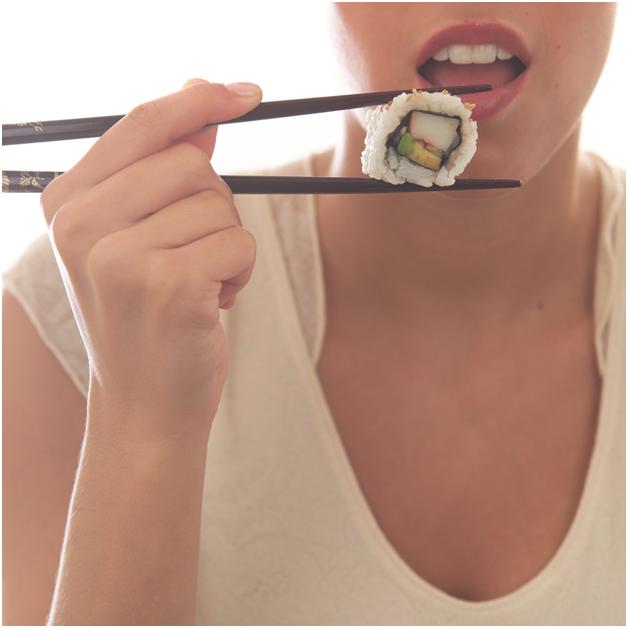
Fish and sushi- safe during pregnancy?

We know that fish are packed with important nutrients, but we also know that fish contain lots of contaminants such as mercury and polychlorinated biphenyls (PCBs) that could potentially affect the baby’s health. And how about sushi? Is that safe in pregnancy? Though it is not recommended that pregnant ladies avoid fish altogether, there are certain guidelines that mommies-to-be should be aware of:

1) Cooked sushi (tamago, california rolls, etc.) is OK. Raw sushi (or sashimi) may carry bacteria and parasites that could make you very sick. Pregnant ladies are about 10 times more likely to get food-borne illnesses, so it’s important to avoid raw fish/ seafood, deli meats (unless they’re heated until they’re steaming hot),  and unpasteurized products. 

2) There are certain fish that contain very high levels of mercury. AVOID eating grouper, tilefish, swordfish, shark, king mackerel.

3) According to the American Pregnancy Association, the following fish contain high levels of mercury and should be eaten no more than three 6-oz servings per month: bass saltwater, croake, halibut, tuna (canned, white albacore), tuna (fresh bluefin, ahi), sea trout, bluefish, lobster

4) The following fish should be eaten no more than six 6-oz servings per month: carp, mahi mahi, crab (dungeness), snapper, crab (blue), herring, crab (snow), monkfish, perch (freshwater), cod, tuna (canned, chunk light), tuna (fresh Pacific albacore)

5) Two 6-oz servings of the following fish can be eaten per week: anchovies, butterfish, calamari (squid), caviar (farmed), crab (king), pollock, catfish, whitefish, perch (ocean), scallops, flounder, haddock, lobster (spiny/rock), sole, crayfish, salmon, shrimp, clams, tilapia, oysters, sardines, trout (freshwater)

SOURCE: American Pregnancy Association

Common blood pressure drugs could RAISE blood pressure

Imagine taking a drug to lower your high blood pressure, only to find that it has made the problem worse! That’s exactly what researchers at the Albert Einstein College of Medicine of Yeshiva University found out in a study published in August 2010. They discovered that commonly prescribed drugs to treat high blood pressure were actually raising blood pressure higher in a significant number of patients. These hypertension drugs- which included diuretics, calcium channel blockers, beta blockers and ACE inhibitors, raised blood pressure in around 16% of 945 patients. These patients’ blood pressure was already dangerously high even before they were given the drugs.

Researchers of the study conclude the problem is that medical doctors are adopting a one-drug-treats-all approach instead of being more careful in selecting the most appropriate drug for their patient. The study suggests that a routine blood test- measuring levels of renin, an enzyme in the blood- could help one avoid this unwanted side effect. Dr. Alderman, a former president of the American Society of Hypertension, says measuring renin levels in the blood is useful in predicting “the most appropriate treatment.” 

If you are on one or more pharmaceutical drugs to treat high blood pressure (i.e. hypertension) and the blood pressure doesn’t seem to be going down (or is worsening), talk to your family doctor or licensed naturopathic doctor to get your renin levels checked.  

SOURCE: American Journal of Hypertension, 2010; doi: 10.1038/ajh.2010.114

Infrequent gazing= higher risk for autism?

Could your six-month-old’s current behaviour indicate a higher risk for autism in the future?

A study published in the September issue of the Journal of Child Psychology and Psychiatry has found that an early marker for later communication and social delays in infants at a higher risk for autism is infrequent gazing at other people when unprompted. Six-month-old infants in the study were given the opportunity to pay attention to either an object or their caregiver. Those in the high-risk group were not as engaged or socially interactive on their own as their peers, though they would still respond when prompted by their caregivers. Dr. Rebecca Landa, one of the authors of the study and director of Kennedy Krieger’s Center for Autism and Related Disorders, says this could be “a subtle difference that could be easily overlooked by both parents and some professionals.”

She recommends teaching infants simple songs paired with easy, predictable gestures to promote language and social learning, rather than using electronic toys that can be enjoyed and operated without engaging with others. Humans are interactive social beings. No electronic toy, TV show or computer software can replace the interaction with another human being!

Natural anti-depressant (SAMe) effective for depression: Study

A study conducted by Harvard Medical School and Massachusetts General Hospital (MGH) suggests that S-Adenosyl Methionine (SAMe), a nutraceutical/ natural health product, can be an effective and well-tolerated adjunctive treatment for adults with major depressive disorders. Published in the August 2010 American Journal of Psychiatry, this study follows another study published in 2004  (Journal of Clinical Psychopharmacology) which concluded that pharmaceutical anti-depressants used in combination with SAMe were significantly more effective in treating depression than medication alone. SAMe is currently a prescription medication in Europe, while it is sold as a natural health supplement in other countries.

“With each study we continue to gain a better understanding of SAMe’s role in treating depression. This new finding, albeit preliminary and in urgent need of replication, suggests significant, clinically meaningful differences in outcome among patients who had SAMe added to their antidepressant medication treatment compared to those taking a placebo with their medication,” said George Papakostas, M.D., associate professor of psychiatry at Harvard Medical School and director of treatment-resistant depression studies in the Department of Psychiatry at MGH who led the study.

To date, at least 40 clinical studies have been conducted to evaluate SAMe’s use in restoring a healthy mood. It’s exciting to see more and more studies by renowned medical schools affirming the efficacy and relevance of nutraceuticals. If you are interested in treating depression or other mood disorders naturally, or would like adjunctive treatment to pharmaceutical anti-depressants, talk to a licensed naturopathic doctor near you.

Study: Eight signs of cancer

A study published in the British Journal of General Practice (BJGP) has identified 8 signs of cancer that need immediate attention. According to Dr. Shapley who led the study, the 8 symptoms were identified following analysis of 25 studies from the UK, US, Australia, Netherlands, Belgium, Denmark and Germany. According to his team, the following 8 symptoms can predict the risk of cancer in certain age groups:

  • Iron deficiency anemia (possible colon cancer)
  • Blood in urine (possible cancers related to urology)
  • Coughing up blood (possible lung cancer)
  • Difficulty swallowing (possible esophageal cancer)
  • Breast lump or mass (possible breast cancer)
  • Post-menopausal bleeding (possible cancers related to gynaecology)
  • Abnormal prostate test (possible prostate cancer)
  • Rectal blood loss (possible colon cancer in older age groups)

According to the authors of the study, these symptoms can predict the risk of cancer with such accuracy in certain age groups that patients should be referred to a specialist straight away unless there is a good explanation that it is something else.

Professor Amanda Howe, honorary secretary of the Royal College of General Practitioners, agreed with these findings, “It’s useful to see these well known ‘red flag’ symptoms and signs validated in primary care research, and reinforces the importance of encouraging patients to discuss worrying symptoms early with their GP.”

Of course, you need to understand that these eight symptoms are not the ONLY potential warning signs for cancer. On the other hand, just because you experience one of the symptoms doesn’t necessarily mean you have cancer.  Nonetheless, there are many types of cancer which cause many different symptoms. It’s important to see your doctor if you notice an unusual or persistent change in your body. As a spokesman for Cancer Research UK puts it, “When cancer is diagnosed at an early stage, treatment is often more likely to be successful.”

Where do warts come from?

If you’ve ever had warts before, you know that the good thing is they go away on their own, more often than not, after a while. But the question is, where do they come from in the first place?

Warts are viral infections caused by over 100 different strains of the human papillovirus (HPV). HPV is everywhere and can spread from person to person by direct contact. It usually enters the skin through a cut or scratch, then incubates for a few months before developing a wart in that area. If you pick at the wart and then touch broken skin elsewhere on your body, the virus may be transferred to the new site. That’s how you get multiple warts.

Warts usually appear as greyish, cauliflower-like growths. Or, they can be as tiny as a pinhead or slightly larger. Common warts show up just about anywhere, particularly on the hands and feet. Plantar warts grow inward on the soles of the feet and often cause pain on pressure. Flat warts are often found on the arms or face. Genital warts can appear in tiny clusters or spread into a large area in the genital or anal area. “High-risk” HPV strains cause cervical cancer, penile cancer, vulvar cancer and anal cancer. HPV is among the most prevalent sexually transmitted infection or disease. In women, we know that persistent HPV infections (commonly HPV types 16 and 18) are responsible for causing changes in the cervix which often leads to cervical dysplasia or cervical cancer.

There is currently no “cure” for HPV, but if your immune system is working properly, the warts often go away on their own. There are treatments available for visible warts, including liquid nitrogen cryosurgery and gels/ creams containing podophyllotoxin (found naturally in a medicinal herb called Podophyllum peltatum). Two vaccines, Gardasil and Cervarix, are available as a prevention against infections from a few “high-risk” HPV strains that cause cervical/ genital cancers and genital warts. These are targeted at young women and men before they become sexually active. All sexually-active women should get a PAP smear done annually to detect for any abnormal changes in the cervix.