Harvard study: childhood exposure to pesticides linked to cancer

kidsAccording to a meta-analysis by the Harvard School of Public Health, young children exposed to insecticides inside their homes may be slightly more at risk for developing leukemia or lymphoma during childhood. The article, published in Pediatrics in October 2015, found that children exposed to indoor pesticides had a higher risk of developing blood cancers.

“We don’t know ‘how much’ exposure it takes, or if there’s a critical window in development. Is the window during pregnancy? Or even before pregnancy? That will take a much deeper investigation,” said senior researcher Chensheng (Alex) Lu, an associate professor of environmental exposure biology at the Harvard School of Public Health in Boston.

If you have children or are planning to have children, there are certain precautionary measures you can take:

  1. If you are pregnant, have babies or young children, do not use pesticides indoors. If residential pesticides must be used, do not be present when they are being sprayed/ used.
  2. Some essential oils can be used as natural pesticides that are safer for your family. Peppermint, citronella, eucalyptus and neem oil are among many that can ward off bugs naturally and effectively. These natural products can be found in more kid-friendly, “natural”, commercial bug sprays nowadays. Some people make their own but make sure you consult a specialist/ herbalist as essential oils must be diluted if placed or sprayed directly on skin.
  3. When outdoors, use natural mosquito/ insect repellents. Protect your skin by wearing light, long-sleeve shirts and pants. Pull your socks over pant cuffs.

SOURCE: http://www.hsph.harvard.edu/news/hsph-in-the-news/pesticide-exposure-in-childhood-linked-to-cancer/

Abnormal PAP smear? Get rid of HPV naturally.

doctor1HPV (human papillomavirus) is the most common sexually transmitted infection, affecting between 60 and 80 percent of sexually active adults in the United States. Persistent infection with the “high-risk” HPV types (including types 16, 18, 31, and 45) may progress to precancerous lesions of the vulva and cervix which could lead to cancer. HPV can also cause cancers of the throat, anus and penis. Other HPV types, mainly types 6 and 11, cause genital warts.

A study presented at the 2014 Society for Integrative Oncology conference showed that it is possible to eliminate HPV infection in women using a nutritional supplement, AHCC (active hexose correlated compound). AHCC is derived from the Shiitake mushroom. Other studies already confirm that AHCC helps the immune system by boosting the amount of natural killer cells, dendritic cells, and cytokines which help the body fight infections and suppress tumour growth.

“With this study, for the first time, we’ve shown it’s possible to eradicate HPV in women using AHCC for only 3 months or up to 5 months,” said lead author of the study Dr. Judith A. Smith, a pharmacist and an associate professor at the University of Texas Health Science Center at Houston Medical School. “We’ve been studying the efficacy of AHCC’s integration with common chemotherapy agents for over a decade, and had previously eradicated HPV infections with AHCC in three orthotopic mouse models. This study confirms the previous results.”

Dr. Yik can help treat HPV infections and optimize cervical health. Click here to read more on abnormal PAP smears, cervical dysplasia and HPV infections.

SOURCE: http://www.tmcnews.org/2014/12/unexpected-threat-hpv/

SCMP XXIV Magazine

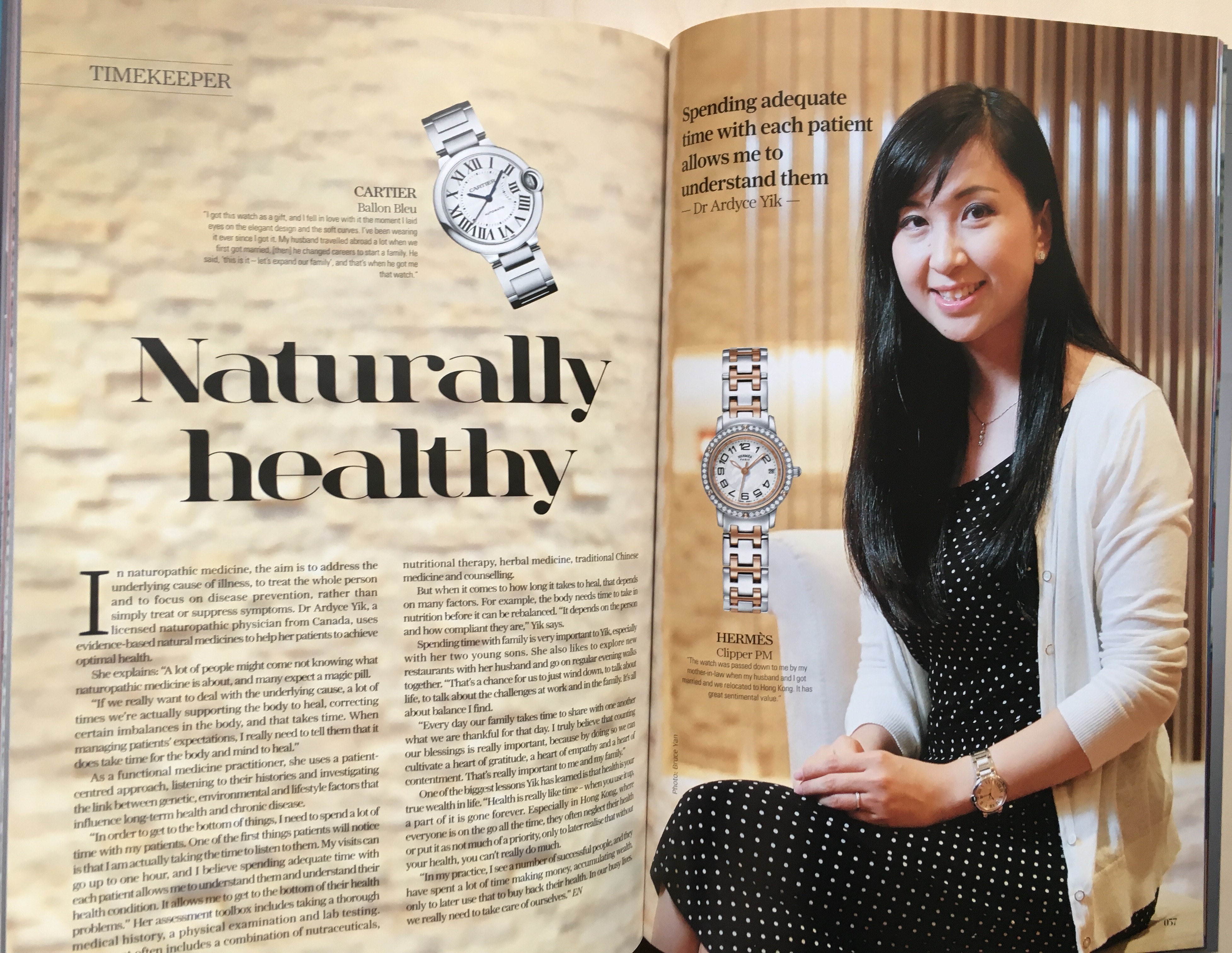
Dr. Ardyce Yik ND is honoured to be featured alongside influential professionals and celebrities in this year’s SCMP XXIV magazine. She was invited to share her views on time and her favourite watches with readers. This December, Dr. Yik marks her 10th year in practice as a licensed naturopathic doctor. She thanks everyone for their support and she will continue to serve her community, helping people to achieve and maintain optimal health- naturally.

Click here to read the magazine article.

FullSizeRender (2)image1 (3)

Simple tips for effective weight loss

weight3Many factors affect our weight. Often times, for long-lasting weight loss, we just need to be consistent in making effective changes to our lifestyle. Below are 6 practical tips to get you started:

  1. Have eggs (or some form of protein) for breakfast. Having protein for breakfast will keep you energized and full for a longer period of time. One particular study showed that replacing a carbohydrate-based breakfast with eggs reduces caloric intake (i.e. you eat fewer calories) for the next 36 hours.
  2. cocktailDrink smart. Alcoholic drinks are relatively high in calories (alcohol = 7 calories per gram, in comparison, carbohydrates = 4 calories per gram, protein = 4 calories per gram, fat = 9 calories per gram). Try drinking water between alcoholic drinks to reduce the total caloric intake in one sitting. You can also choose a lighter alcohol alternative such as a spritzer using carbonated water or cut back on the alcohol altogether.
  3. Use small(er) plates. The larger your plate, the more you will likely put on it. Try switching to smaller plates to help with portion control.
  4. Avoid keeping junk food at home (or at your desk). According to a study from Cornell University, secretaries who kept candy at their desk ate around 48% more than when the candy was kept farther away. Out of sight, out of mind!
  5. fit1Don’t forget the aerobic (cardio) exercise! Aerobic exercise is an excellent way to burn calories and is particularly effective in losing abdominal/ belly fat, the unhealthy fat that tends to cause metabolic disease. Aim for 45-minute sessions, 3 to 5 times a week. A note on yoga: Yoga is not considered aerobic/ cardio exercise. Yoga has numerous health benefits but if weight loss is your goal, cardio is the go-to exercise. Case in point- A 155-pound woman running 6mph burns more than 700 calories in 60 minutes. Performing high-impact aerobics, she burns close to 500 calories. In a Hatha yoga session, that same woman will burn only 281 calories each hour.
  6. Drink green tea. Green tea is packed with powerful antioxidants called catechins, which work synergistically with the caffeine to enhance fat metabolism.

If you’ve tried to lose weight without success or if you suspect underlying issues preventing weight loss, contact a naturopathic doctor such as Dr. Yik who can help you can take control of your weight.

SOURCE:

http://www.ncbi.nlm.nih.gov/pubmed/16373948

http://www.ncbi.nlm.nih.gov/pubmed/20226994

http://woman.thenest.com/yoga-exercise-benefits-vs-aerobic-exercise-3218.html

Lack of face-to-face interaction almost doubles depression risk

liverWe all know the importance of staying connected and in touch with others, but it turns out not all forms of contact are equal. A recent study has found that adults aged 50 or above who rarely see friends or family in person are almost twice as likely to develop depression compared with those who do. In the study, those who met up regularly with loved ones were less likely to report symptoms of depression 2 years later, compared with those who emailed, wrote letters or talked on the phone.

“Phone calls and digital communication, with friends or family members, do not have the same power as face-to-face social interactions in helping to stave off depression,” said lead author Dr. Alan Teo, assistant professor of psychiatry at Oregon Health & Science University. “Meeting friends and family face-to-face is strong preventive medicine for depression.”

3genThe study also noted that depending on your age, the type of individual you socialize with- family member versus friend- also has an impact on depression levels. The researchers found that among adults aged 50 to 69, frequent in-person contact with friends reduced subsequent depression whereas those 70 and older benefited from in-person contact with children and other family members.

SOURCE: Journal of the American Geriatrics Society

Should I drink diet soda? The real deal on artificial sweeteners and your weight.

soft drinkDieters often reach for artificially sweetened foods or drinks, thinking that they can satisfy their sweet tooth without incurring any calories. While this is true, some research shows that artificial sweeteners may actually promote weight gain and affect our health in negative ways.
 
Consider the following:
 
1) One study examined the long-term relationship between consuming artificially sweetened drinks and weight. The 3,682 participants were followed for 7 to 8 years and their weights were monitored. After adjusting for common factors that contribute to weight gain such as dieting, exercising change, or diabetes status, the study showed that those who drank artificially sweetened drinks had a 47% higher increase in BMI than those who did not.
 
2) Another study showed that those who drank over 20 diet sodas per week were twice as likely to become overweight or obese compared to those who didn’t drink diet soda.
 
3)  Another study showed that both sugar-sweetened beverages and artificially sweetened beverages were linked with an increased risk of developing Type 2 Diabetes.
 
How can this be?
 
imgresFirst of all, we need to understand how artificial sweeteners (or sugar substitutes) work. Artificial sweeteners contain no calories but give you the sweet taste found in regular table sugar. So, for those who are trying to restrict calories in their diet, they may think that artificial sweeteners are better because of the reduced calories they consume. However, some researchers have found that artificial sweeteners don’t satisfy the “food reward” centres of the brain as regular sugar does, causing us to crave more sweet food and drinks which, in turn, may lead to weight gain. Furthermore, many people mistakenly think that food and drinks containing artificial sweeteners are healthier, but this isn’t the case. Artificial sweeteners are found in processed foods, which are not as nutritious and don’t offer the same health benefits as whole foods such as vegetables and fruits. And just because a food is marketed as “sugar-free” doesn’t mean it’s free of calories. You can still gain weight if you eat too many sugar-free foods if they contain other ingredients that have calories.
 
Click here to read more about artificial sweeteners.
 
SOURCE:
1) Bellisle F, Drewnowski A. Intense sweeteners, energy intake and the control of body weight. Eur J Clin Nutr. 2007;61:691-700.
2) Fagherazzi G, Vilier A, Saes Sartorelli D, Lajous M, Balkau B, Clavel-Chapelon F. Consumption of artificially and sugar-sweetened beverages and incident type 2 diabetes in the Etude Epidemiologique aupres des femmes de la Mutuelle Generale de l’Education Nationale-European Prospective Investigation into Cancer and Nutrition cohort. Am J Clin Nutr. 2013;97(3):517-23.

Antibiotic use in infancy linked to disease later in life

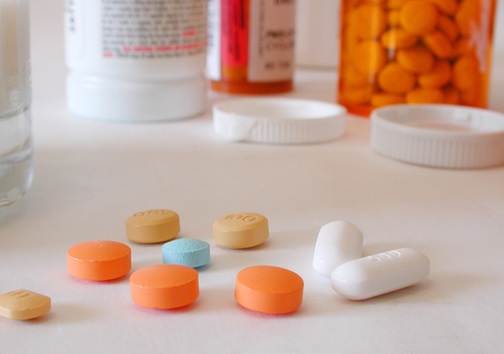
pills2Antibiotics are the most common prescription drug given to children nowadays, and in a new study in the journal Cell Host & Microbe, researchers discuss the connection between antibiotic use in infants, imbalance in gut bacteria and the development of disease later in life.

“Previous studies showed links between antibiotic use and unbalanced gut bacteria, and others showed links between unbalanced gut bacteria and adult disease. Over the past year we synthesized hundreds of studies and found evidence of strong correlations between antibiotic use, changes in gut bacteria, and disease in adulthood,” explained Dan Knights, an assistant professor specializing in computational biology at the University of Minnesota.

Researchers found that using antibiotics destroys the communities of gut bacteria that help immune cells mature. Even if or when these colonies return, the immune system remains impaired.

babyBy altering the gut microbiota, and thus the immune system very early in life, antibiotics can negatively influence long-term health. There is mounting evidence that dysbiosis, defined as an imbalance in gut microbes, can cause potential harm to emotional and physical health. Dysbiosis has been linked to infectious diseases, allergies, autoimmune disorders, behavioural disorders and even obesity, later in life.

For example, several studies point to a link between gut bacteria and autistic-like behaviour.  A more recent study, published in April 2015, reveals how gut microbes are important for the production of serotonin, a brain chemical traditionally associated with the regulation of emotions and behaviour. Now, scientists estimate that 90% of serotonin is made in the gut, and imbalances in serotonin production outside the brain are linked to diseases such as irritable bowel syndrome, cardiovascular disease and osteoporosis. Stay tuned for more on serotonin and how changes in gut microbes affect emotions and behaviour.

For natural alternatives to pharmaceutical antibiotics, click here. To rebuild your immunity naturally, click here.

SOURCE: Antibiotics, Pediatric Dysbiosis, and Disease, Pajau Vangay et al., Cell Host & Microbe, published online 13 May 2015.

Abnormal Pap smear. HPV infection. Now what?

A Pap smear is a screening test for cervical cancer. It alerts doctors to the presence of suspicious cells on your cervix. Women who have an abnormal Pap smear such as ASCUS are often told to wait and repeat the Pap in 6 to 12 months’ time. But what if you can do more than just “wait”? What if you can reverse ASCUS or cervical dysplasia- naturally? This is where naturopathic medicine comes in.

Consider the following:

1) Many women, particularly younger ones, who have ASCUS or cervical dysplasia (LSIL, HSIL, CIN I, etc.) also find out that they test positive for high risk sub-types of HPV (aka human papillomavirus). A chronic HPV infection can potentially lead to cervical cancer if left unmonitored or untreated. While some women’s immune systems are able to eradicate the virus, others face stubborn HPV infections with Pap smears that keep coming back with increasingly severe abnormalities. Supplementation with the medicinal mushroom, Coriolus versicolor, has been shown not only to reverse abnormal cervical cells but also fight off HPV. Dr. Silva Couto found that Coriolus supplementation over a one-year period increased regression of LSIL (72% regression rate compared to 47.5% without supplementation) and induced clearance of the high risk sub-types of HPV (90% regression rate compared to 8.5% without supplementation). These results were so impressive that they were presented at the 20th European Congress of Obstetrics and Gynocology in 2008. In another study involving cervical cancer, treatment with Coriolus together with radiotherapy showed clearance of cancer cells in 36% of the patients versus 11% of controls and improved the 5-year survival from 48% to 79%.

2) Nutrient deficiencies are common in women who have cervical dysplasia. Several studies show that low serum folate levels are linked to cervical dysplasia while high dose folic acid supplementation can reverse cell abnormalities.

3) Vitamin C and other antioxidants may play a role in the treatment of cervical dysplasia. A study on Korean women looked at 58 colposcopy-confirmed cases of CIN and compared them to 86 women with normal Pap smears. The plasma concentration of Vitamin C was significantly lower in the CIN group than in the control group, suggesting a role for Vitamin C in the treatment of CIN.

doctor24) There are many botanical medicine/ nutraceutical protocols that can help boost the immune system and provide overall support for optimal health. Each protocol may differ depending on the individual because even the same diagnosis may have different root causes. For example, in younger women, ASCUS Pap smear results are more often caused by HPV infection than a vaginal infection or cervical inflammation whereas in older women, abnormal results are more often caused by the latter. Dr. Yik  assesses and investigates all aspects of your health in order to determine the best individualized treatment for you.

At the end of the day, be informed of your options for managing cervical health. There are times when natural medicine is not an option for treating cervical dysplasia due to the severity and location of the disease but in many cases, naturopathic treatment of cervical dysplasia and HPV is a safe and effective option.

Please note: For licensed naturopathic doctors, guidelines for referral to colposcopy are the same as ob/gyns.

REFERENCES:

Bogdanova J. [Coriolus versicolor–innovation in prevention of oncogynecological diseases, especially HPV]. Akush Ginekol (Sofiia). 2008;47 Suppl 3:51-3.

Ghosh C, et al. Dietary intakes of selected nutrients and food groups and risk of cervical cancer. Nutr Cancer. 2008;60(3):331-41.

Piyathilake CJ, et al. Lower risk of cervical intraepithelial neoplasia in women with high plasma folate and sufficient vitamin B12 in the post-folic acid fortification era. Cancer Prev Res. 2009;2(7):658-664.

Piyathilake CJ, et al. Lower red blood cell folate enhances the HPV-16-associated risk of cervical intraepithelial neoplasia. Nutrition. 2007;23(3):203-10.

Lee Gj, et al. Antioxidant vitamins and lipid peroxidation in patients with cervical intraepithelial neoplasia. J Korean Med Sci. 2005 Apr;20(2):267-72.

Optimal pregnancy: steps to a healthy, full-term baby

pregnant2Ever wonder why some women sail smoothly through pregnancy? Want to carry a healthy baby to full term and reduce the risk for pregnancy-related complications? It turns out that what you do during pregnancy has a huge impact on your pregnancy journey and your baby’s health. Nutrition and other lifestyle factors during the early periods in the lifecycle- just before conception, the months spent in utero and the months after birth- can have profound effects on an individual’s health at birth, during childhood and even into adulthood.

Read on to discover how you can lower risk of disease and give your baby the best headstart to health- starting in the womb:

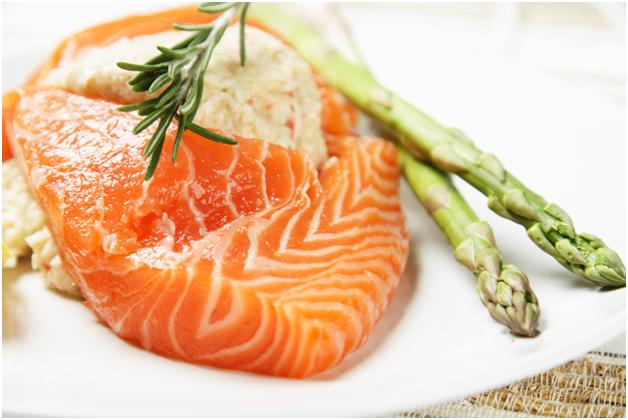
salmon1) First things first. Eat a variety of healthy, wholesome foods to ensure that you and your baby get adequate nutrients. Avoid processed foods which have low nutritional value but are filled with chemical additives. Take a folic acid supplement at least one month prior to conception to prevent neural tube defects. Choose food-based prenatal multivitamins which are natural, safe, gentler on the stomach and easier to absorb by the body.
capsules2) Eat foods rich in good healthy fats (e.g. omega-3), particularly DHA (docosahexaenoic acid). DHA is essential for proper brain growth and eye development in fetuses and young infants. One study shows that visual function is enhanced even up to 13 years later in children exposed to high amounts of DHA in the womb. Not only that, but recent studies have found that daily maternal supplementation of DHA can reduce pregnancy-related complications such as pre-term birth. Food sources of DHA include omega-3 eggs, salmon, cod, herring, sardines and other oily fish. DHA is also found in seaweed but in very small quantities. If you are supplementing, choose a product that has been purified from all environmental toxins (and preferably third-party tested for quality and purity assurance).

3) New research shows that women who take vitamin D during pregnancy reduce their risk of pregnancy-related complications, including pre-term birth, gestational diabetes and infection. One study shows that taking 4000IU of vitamin D daily in their second and third trimesters showed no evidence of harm, but halved the rate of pregnancy-related complications compared to women who took only 400IU. It is important to talk to your obstetrician or naturopathic doctor before taking any vitamins or supplements during pregnancy.

baby54) Probiotic supplementation during pregnancy has several benefits. Infants are born with a completely sterile gut, so they receive their first dose of beneficial bacteria from their mom when they pass through the birth canal and from nursing. Children with healthy intestinal flora have a lower risk of ear infections and illness in the first few years. Furthermore, studies show that supplementation during pregnancy can reduce the risk of allergies and eczema. One study shows when women take probiotic supplements during pregnancy, their babies are 40% less likely to develop eczema compared to women who didn’t.

5) Pregnant women are more susceptible to foodborne illnesses, so avoid raw eggs, raw seafood, undercooked or possibly contaminated meats (e.g. hotdogs, deli meats). Also avoid shark, swordfish and king mackerel during pregnancy because these contain high levels of methylmercury which are toxic to the nervous system. During your pregnancy, hot baths and saunas are big no-no’s.

6) Keep active, take adequate rest and take care of yourself emotionally. Exercising regularly not only trains strength and endurance needed to carry a baby and handle the physical stress of labour, but also helps to reduce stress. Remember to stay hydrated during exercise and don’t over-exert yourself. It’s common to feel tired, or even exhausted, during pregnancy. Listen to your body, slow down and get more rest. Mood swings or feeling like you’re on an emotional roller coaster is normal at times. Talk to your partner and friends about your feelings. If you’re feeling constantly overwhelmed or constantly upset, express your concerns to your caregiver so appropriate help can be offered.

doctor1During pregnancy, many women prefer a drugless approach and choose to limit the use of pharmaceutical medication. Dr. Yik is trained in nutrition, natural medicine and traditional Chinese medicine. She offers natural support to conditions including morning sickness, colds/ flus, urinary tract infections, insomnia, skin conditions (e.g. eczema flare-ups), fatigue, constipation, etc. Click here to learn more about her prenatal care program, suitable for pregnant women at any point in time.

SOURCE:

1 http://www.ncbi.nlm.nih.gov/pmc/articles/PMC3183324/

2 The British Journal of Dermatology. 2010 Sep;163(3):616-23.

How to boost your immune system to avoid the flu

This season, the flu virus strain H3N2 is getting lots of media attention. Just like other H3N2-dominant seasons in the past, there are more hospitalizations and deaths, especially among the elderly, the very young and those who are immunocompromised. A mismatch of the vaccine this season means that those who were vaccinated are not getting the protection they hoped for, so now what?

kid3“The strength of your immune system is what determines who gets sick and who doesn’t,” explains Woodson Merrell, MD, director of integrative medicine at Beth Israel Medical Center in New York City. So, help your body help you by boosting your immunity. To get started, consider the following:

1) Elderberry extract (Sambucus nigra) enhances the immune system and studies show that people taking elderberry recover from the flu faster than those who don’t. It helps reduce sinus and nasal congestion, and is deemed an effective treatment for the flu.

2) Vitamin D supports the immune system. “Vitamin D helps your body produce a protein called cathelicidin that fights bacteria and viruses,” says Carlos Camargo, M.D., an associate professor of medicine at Harvard Medical School. Studies show that people with adequate levels of vitamin D are less likely to get the flu, and when they do, they tend to recover faster compared to those who are deficient. In my practice, I see many adults and children in Hong Kong who are deficient in vitamin D. Before you start popping vitamin D supplements, get your levels checked so the correct dosage is given, if needed. Too much vitamin D puts you at a higher risk for kidney stones.

3) Up to 80% of our immune system lies in our gut, so it makes sense to boost immunity through the gut! Studies show that probiotic supplementation increases T-cell count, which makes you less vulnerable to infections. In a study involving 3- to 5-year-olds, daily probiotic supplementation for 6 months reduced fever, rhinorrhea, cough and antibiotic prescription incidence, as well as the number of missed school days attributable to illness.

4) Eat well balanced, wholesome meals- make sure you’re eating adequate protein, good fats and a variety of vegetables and fruits. Include immune-boosting foods such as garlic, onions, ginger, shiitake/ maitake/ reishi mushrooms, green vegetables and berries in your diet. Vitamin C and zinc play important roles in immune defence, so remember to eat foods high in those nutrients.

5) Get enough sleep, exercise regularly, skip the sweets and alcohol, stop smoking.

allergies26) Certain essential oils such as clove and eucalyptus have immune-enhancing properties. Some choose to diffuse it while others use direct or indirect inhalation. For topical use, always read the labels carefully and seek a certified aromatherapist if unsure.

Always remember to wash your hands regularly with soap and avoid touching your face/ nose/ mouth. If you are sick, seek medical attention. Click here to read more on boosting your child’s health naturally. Click here to read more on how to rebuild your immune system and fend off illness.

SOURCE:

http://umm.edu/health/medical/altmed/condition/influenza

http://ajcn.nutrition.org/content/91/5/1255.full

http://umm.edu/health/medical/altmed/herb/elderberry

http://pediatrics.aappublications.org/content/124/2/e172.short