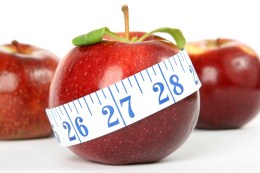
 A healthful diet and regular exercise regime are essential when it comes to weight loss but which one is more important in achieving the results you want? If you want to drop the weight, it turns out that reducing calorie intake from your diet is more effective than exercise. “People expect exercise to be a great way to help them lose weight, but the effects on weight are only small,” says Dr. Dick Thijssen, a professor in cardiovascular physiology and exercise at Liverpool John Moores University. According to him, if you exercised for 3 or 4 months without changing your diet, you’d only lose about 1 kg. Findings from research studies agree with Dr. Thijssen. Apparently, exercise alone has a negligible impact on weight loss, so if you are relying on exercise alone to lose weight, you will most likely be disappointed.
 The key to weight loss is achieving a negative energy balance, meaning you take in fewer calories than you burn. Decreasing our calories through diet is so much more effective than exercise because it takes a lot of physical activity or working out to create a calorie deficit. For example, you need to burn 3500 calories to lose 1 pound of fat. If you relied on exercise alone, you would essentially need to run over 10 km or cycle 2 hours each day to burn 500 calories and lose one pound a week (without increasing your caloric intake, i.e. without eating more to compensate for that killer work-out!). On the other hand, 500 calories in food is approximately equivalent to a plain bagel with 2 tbsp of cream cheese, a Belgian waffle with butter and maple syrup, 2 glazed donuts or a Starbucks Grande (16 oz) S’mores Frappuccino blended coffee with 2% milk. As you can see, it’s much easier to cut calories from your diet than to burn the same amount of calories through working out.
 No, exercise is essential to our well-being! Not only does exercise reduce our stress and decrease the risk of heart disease, diabetes and dementia but it’s also linked to a happier mood and longer life expectancy.
 The American Academy of Pediatrics (AAP) published new guidelines in 2017 in the journal Pediatrics, stating that children under the age of one should not be given fruit juice, unless advised by their doctor. The AAP cites increasing obesity rates and risk for dental caries in children for the updated guidelines. Besides sugary juices, where else is sugar hidden in our foods?
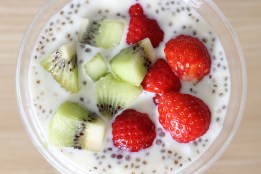
 What to eat instead: Buy plain Greek yogurt (or plain yogurt) and add fresh fruit for taste. Fresh fruit contains the pulp, fiber and nutrients of the whole fruit. And since the sugar in fruits is paired with fiber and water, it is released more slowly into your body, providing a steady stream of energy.
  Commercial granola/ breakfast bars. These bars may look healthy, but sometimes they contain as much sugar as a chocolate bar! What to eat instead: Make your own granola bars or energy balls with whole rolled oats, chopped nuts, pumpkin seeds, unsweetened dried fruit, chia seeds, toasted coconut flakes, etc. Or try munching on a handful of antioxidant-rich almonds or walnuts.
 What to eat instead: Muesli (unsweetened, all natural) is a good alternative. Consisting of raw rolled oats and other grains, dried fruit, nuts and seeds, it typically contains less sugar than leading commercial cereals.
 At the end of the day, eating natural, unprocessed, whole foods is the best way to avoid hidden sugars.
 I had a peculiar case, recently. A patient, Mr. X, suddenly experienced bleeding through the skin pores on his back- much like sweating, but sweating out blood. He had previously seen me for allergies and food intolerances, but never mentioned anything of this sort. I asked Mr. X about any dietary changes and if he was taking any new medicines or supplements which may thin the blood. He told me that he had only started taking my supplements recently, but mentioned in passing that he had increased the dosage of one particular drug he was taking on a regular basis. Careful investigation led me to the culprit- It turns out that particular drug, in extremely rare cases, could reduce platelet count thus increasing the risk of bleeding. Mr. X stopped taking the drug immediately, and he hasn’t experienced bleeding through his skin pores since.
 Spring has sprung and you may be eager to lose some of that winter weight. But what if you’ve tried everything and you still find it difficult to lose weight? Could there be underlying reasons preventing you from losing weight?
  Stress. High levels of
  Emotional Eating. Do you need your comfort food (chocolate, ice cream, baked goods, etc.), especially in the evening? Do you crave certain foods under stress or when you feel down? If so, you may be struggling with emotional eating. Many of us turn to food for stress relief, comfort or as a reward. Emotional eaters often feel powerless over their food cravings. Dr. Yik is experienced in helping patients practise mindful eating, as well as regain control over both food and your feelings. She can also rule out any pre-existing condition like anxiety, depression or blood sugar imbalances.
 Dr. Yik is dedicated to helping each patient get to the root cause of their health condition or concern. She is in charge of the Weight Loss program at IMI clinic in Hong Kong. To successfully lose weight, you need not only a suitable diet and regular exercise but also to ensure that underlying hidden causes are addressed.
 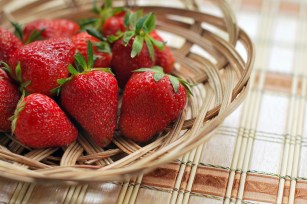 Yesterday, the Environmental Working Group (EWG) released 2017’s Dirty Dozen™ list, which is comprised of fruits and vegetables most contaminated with pesticides. Strawberries are at the top of the list, with spinach at second place in the annual ranking of conventionally grown produce with the most pesticide residues. In the analysis, a single sample of strawberries showed 20 different pesticides. Spinach, on average, had twice as much pesticide residue by weight than any other crop.
 The EWG’s analysis of tests by the U.S. Department of Agriculture (USDA) found that nearly 70% of samples of 48 types of conventionally grown produce were contaminated with pesticide residues. A total of 178 different pesticides and pesticide breakdown products were on the thousands of produce samples it analyzed. The pesticides persisted on fruits and vegetables even when they were washed and, in some cases, peeled.
 Dr. Philippe Grandjean, adjunct professor of environmental health at Harvard and lead author of a 2014 study linking synthetic chemicals and brain disorders, is concerned because even ordinary (undiagnosed) children are often affected. “The greatest concern is the large numbers of children who are affected by toxic damage to brain development in the absence of a formal diagnosis… They suffer reduced attention span, delayed development, and poor school performance. Industrial chemicals are now emerging as likely causes.”
 For produce heavily laden with pesticide residues (see the Dirty Dozen™ list above), buy organic. Reduce pesticide exposure, especially in children and if you are trying to conceive. “Even low levels of pesticide exposure can be harmful to infants, babies and young children, so when possible, parents and caregivers should take steps to lower children’s exposures to pesticides while still feeding them diets rich in healthy fruits and vegetables,” said Dr. Philip Landrigan of the Mt. Sinai School of Medicine.
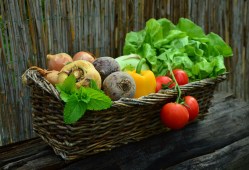 Fruits and vegetables are an important part of our diet. They contain numerous vitamins, minerals and plant chemicals that keep us healthy. A diet high in fruits and vegetables can help protect against cancer, diabetes, heart disease and
  Do you get cold sores? Want to get rid of them naturally- and prevent them from returning? Read on to get the lowdown on this unsightly but common viral infection.
 Try eating more of the following foods, which have a high lysine to arginine ratio:
 L-Lysine is a popular natural remedy for cold sores. This amino acid has been found to be effective in reducing occurrence, severity and healing time for recurrent cold sores. L-Lysine supplements can be taken as treatment or prevention. A
  Studies confirm that the menstrual period is also a common trigger for cold sores or genital herpes. While Western medicine offers antiviral drugs once a month for that time of the month, some women aren’t comfortable taking pharmaceutical drugs that often. It is important to treat the root cause if you want to prevent recurrence.
 According to researchers at Imperial College London, the greatest benefit comes from eating 10 portions of fruit and vegetables per day, which is double the current guidelines of 5 fruit and vegetable servings daily, for adults. It turns out that eating 5 a day is good, but having 10 a day is better and shows major benefit in reducing the chance of heart attack, stroke, cancer and early death.
 As reported in the International Journal of Epidemiology, the researchers analyzed data from 95 studies, involving close to 2 million participants. They studied 112,000 cancer cases, 43,000 cases of heart disease, 47,000 cases of stroke, 81,000 cases of cardiovascular disease (CVD) and 94,000 deaths.
 HOW MUCH IS ONE PORTION?
 EASY WAYS TO INCREASE FRUIT AND VEG INTAKE
 What if it is possible to turn back the internal clock? What if we do have some control on how quickly we age? Nobel Laureate and molecular biologist, Elizabeth Blackburn, claims that the key to slowing the aging process lies within our cells- specifically in telomeres, which are cap-like regions at the ends of our chromosomes.
 It turns out that telomeres play an important role in health and aging. Telomeres are the tips at the ends of our chromosomes that protect our DNA from deterioration. They are like the plastic caps at the end of shoelaces, or like the erasers at the end of pencils. Over time, as our cells divide over and over again, the telomeres become shorter and shorter. When the telomeres get too short to work properly, cells in your body start to malfunction or die, and the diseases of old age set in. Shorter telomeres are associated with a broad range of aging-related diseases, including various forms of cancer, stroke, dementia, cardiovascular disease, diabetes and obesity. Accelerated telomere shortening, which leads to premature aging, can occur with stress, poor dietary choices and inflammation. But increasing telomere length is also possible- In 2015, Stanford researchers found that extending telomere length turns back the internal clock in those cells. And growing evidence is pointing to certain lifestyle behaviours, aspects of nutrition and nutraceuticals/ herbs that can increase telomere length and essentially slow down the aging process.
 Regular exercise. A 2008 study involving more than 2400 twins compared the telomere length in those that exercised regularly versus the sedentary ones. The researchers found that after 1 year, based on telomere length, those who exercised in their leisure time on a regular basis were biologically younger than those who didn’t.
 Intense, unmanaged stress can cause rapid, premature aging. Long work hours, excessive school or work pressure, life crises and relationship issues are among the many stressors we often face in life. A number of studies have linked stress to shorter telomeres. To combat the detrimental effects of stress, try taking adaptogens. Adaptogens are medicinal herbs that help our bodies adapt to stress, resist fatigue and reduce anxiety. They have been used for many centuries in Asia (mainly China and India) to strengthen the body, improve energy and boost resilience in the face of stress. Adaptogenic herbs such as Rhodiola and Astragalus have been reported to prevent telomere shortening and even lengthen telomeres, thereby decelerating the aging process and promoting longevity.
 Take your omega-3s. Omega-3 fatty acids not only protect your heart, play a crucial role in brain function (memory, cognition) and benefit eye health, but it turns out this essential nutrient also affects telomere length. Studies have shown that higher blood levels of omega-3 fatty acids are associated with a slower rate of telomere shortening. One particular study showed that in patients with coronary heart disease, those with higher blood levels of omega-3 fatty acids had longer telomeres.
 A Lancet study in 2013 showed that changes in diet, exercise, stress management and social support can result in longer telomeres, even in patients with a history of cancer. In the study, men who had prostate cancer were divided into two groups. After 5 years, the group that adopted the following lifestyle changes experienced an increase in telomere length of approximately 10%:
 Click here
 Hong Kong,
  Exposure to bright light in the evening or before bedtime (
 Expose yourself to bright light during the day. Minimise use of bright lights in the evening. Once it gets dark outside, your pineal gland begins to produce and secrete melatonin, a hormone which controls your sleep-wake cycle. Continuously being exposed to light during the evening will affect melatonin levels and sleep. One study showed that melatonin was suppressed in preschool children who were exposed to bright light in the evening. In the study, one hour of bright-light exposure in the evening suppressed the children’s melatonin secretion by around 90% and these levels remained suppressed for up to 50 minutes after light exposure.
 Tension-reducing techniques. While you lie in bed, take a few deep breaths using your nostrils. Exhale slowly and fully before taking the next deep breath. Try the alternate-nostril breathing technique where you plug one nostril and slowly inhale through one side, then switch/ plug the other nostril and exhale completely through the other side. Another stress-reducing technique: clench your fists for 3 seconds, then slowly release them. Gently shake loose your hands. Repeat these steps several times.
 New research released this month found that eating a handful of nuts every day cuts the risk of a wide range of illnesses. Researchers at the Imperial College of London and the Norwegian University of Science and Technology concluded that people who eat around 20g (around a handful) of nuts on a daily basis have a lower risk of heart disease and cancer, as well as respiratory conditions, diabetes and infections. Munching on nuts reduced the risk of heart disease by nearly 30%, the risk of cancer by 15%, and the risk of premature death by 22%. Most of the reduction in risk was associated with an intake of approximately 15 to 20 grams per day, and no further reduction was noticed if the intake was increased.
 Dr. Ardyce Yik ND